
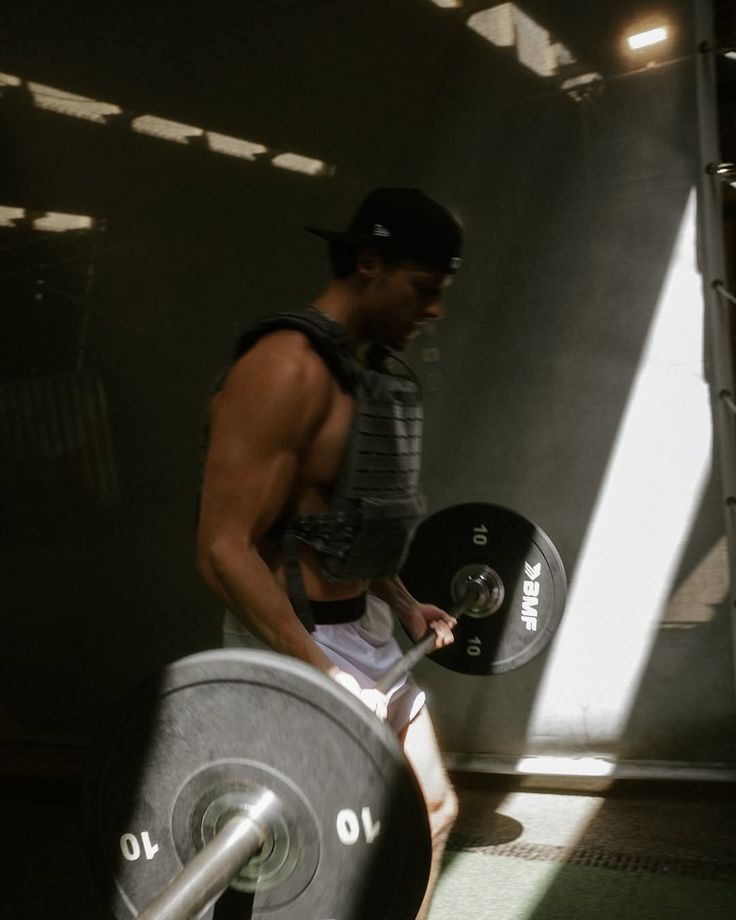
Arnold split

Arnold split is a high-frequency training split that pairs chest + back, shoulders + arms, and legs, typically repeated twice per week. It is best for intermediate lifters who can train consistently, recover well, and want a simple weekly structure that supports progression. The split works when you repeat key lifts, track performance over time, and apply progressive overload without changing the plan every week.
If you want to know whether this split fits your schedule, run it for 2 weeks and track the same main lifts to see how your recovery and performance trend.
Internal links:
Quick Answer / TL;DR
- Best for: Intermediate lifters who can train 5-6 days per week
- Not ideal for: Late beginners, inconsistent schedules, or poor recovery
- Structure: Chest + Back, Shoulders + Arms, Legs (repeat)
- Typical frequency: Each muscle group about 2x/week
- How long to run: 6-10 weeks before changing the split
- Progression focus: Repeat key lifts, add reps or load gradually, track weekly trends
What it is and why it works
The Arnold split is a classic 3-day rotation that usually looks like this:
- Day 1: Chest + Back
- Day 2: Shoulders + Arms
- Day 3: Legs
- Then repeat (often with 1 rest day as needed)
Why it works for many lifters:
- High frequency without complicated planning - you train each area more than once per week.
- Efficient pairing - chest and back can balance each other, and shoulders and arms complement pressing and pulling.
- Progress is easier to see - the rotation repeats, so you can compare performance week to week.
Where it goes wrong:
- The split is easy to overdo. If volume per session is too high, recovery fails and progression stalls.
Internal links:
Best for / Not ideal for
Best for
- Lifters who can train 5-6 days per week most weeks
- Intermediate lifters who already have stable technique on key compounds
- People who prefer a repeatable rotation over random daily choices
- Lifters who like training upper body often while keeping legs on a dedicated day
Not ideal for
- Late beginners who need simpler sessions and more recovery margin
- Anyone who regularly misses workouts (the rotation breaks quickly)
- Lifters who tend to take most sets to failure
- People who want minimal gym time per session
Internal links (placeholders):
How it works in practice
A practical Arnold split is less about copying a long bodybuilding list and more about a clean blueprint:
Session priorities
Each day should have:
- 1-2 progression lifts (the ones you track most closely)
- 2-4 supporting movements for volume
- A clear stop point so session length stays repeatable
Weekly structure options
You have two common ways to run it:
Option A - 6 days/week (highest frequency)
- Chest/Back, Shoulders/Arms, Legs, Chest/Back, Shoulders/Arms, Legs, Rest
Option B - 5 days/week (more recovery)
- Same rotation, but take a rest day when performance starts dipping or schedule demands it
If you cannot reliably train 5+ days, you will usually progress faster on a simpler split like a 4-day workout split or 3-day workout split.
Example (routine / framework / breakdown)
Below is a program blueprint you can reuse for 6-10 weeks. Exercises are examples - the structure is the important part.
Day | Focus | Progression lifts (track weekly) | Supporting work (keep stable) |
|---|---|---|---|
Day 1 | Chest + Back | Bench press (or incline) + Row | Pulldown/pull-up, chest accessory, rear delts |
Day 2 | Shoulders + Arms | Overhead press + Curl or dip/pressdown | Lateral raises, triceps, biceps, optional upper back |
Day 3 | Legs | Squat or leg press + Hinge (RDL) | Leg curl, calves, single-leg work |
Day 4 | Chest + Back | Bench variation + Row variation | Pulldown/pull-up, chest accessory, rear delts |
Day 5 | Shoulders + Arms | Overhead press variation + Arm lift | Lateral raises, triceps, biceps, optional upper back |
Day 6 | Legs | Squat/press variation + hinge variation | Leg curl, calves, core |
Day 7 | Rest | - | Walk, mobility, light activity as needed |
Suggested set and rep targets (general and repeatable):
- Main compounds: 3-5 sets of 4-8 reps
- Secondary compounds: 2-4 sets of 6-12 reps
- Accessories: 2-4 sets of 10-20 reps
Track this split cleanly with Nudges Me so each repeat day shows what you did last time and what to beat next time.
Internal links:
How to progress safely
- Pick progression lifts and keep them for the whole block.
Choose 1-2 main lifts per session and do not swap them weekly. - Use a simple progression rule (double progression).
Work in a rep range (example: 6-10). Add reps until you hit the top end across sets, then add a small amount of load. - Stay mostly repeatable on effort.
Keep most working sets at about 1-3 reps in reserve so you can repeat performance later in the week. - Add volume slowly, only when performance is stable.
If you want more work, add 1-2 sets per muscle group per week, not a whole new exercise list. - Protect legs and lower back recovery.
Two leg days can be productive, but only if you manage hinge intensity and do not chase fatigue every session. - Deload when the trend turns down.
If performance drops across multiple repeats (not just one bad day), reduce volume for a week and then resume progression.
Internal links (placeholders):
Common mistakes
Mistake | Why it’s a problem | Better approach |
|---|---|---|
Treating every day like a max-out | Fatigue accumulates fast with high frequency | Keep most sets repeatable and progress gradually |
Too many exercises per session | Long sessions reduce quality and consistency | 4-7 total movements, stable week to week |
No clear progression lifts | You do work but cannot prove progress | Track 1-2 key lifts per day and progress them |
Switching variations constantly | You lose your baseline | Keep compounds stable for 6-10 weeks |
Overloading legs with heavy hinge work twice | Recovery fails, form breaks down | Alternate hinge intensity and keep one day lighter |
Not tracking sessions | You guess load and volume | Log sets, reps, and load every workout |
How to track this with Nudges Me
To make the Arnold split work long term, you need a clean record of what happened on each repeat day.
With Nudges Me you can:
- Log workouts (exercises, sets, reps, load)
- Follow plans so the rotation stays consistent
- See progression over time by comparing repeated sessions across weeks
Stop rebuilding your Arnold split in Notes or spreadsheets. Log each session in Nudges Me, follow the plan, and make progression over time obvious.
FAQs (EXACTLY 5)
- What is the Arnold split?
A 3-day rotation that trains chest + back, shoulders + arms, and legs, often repeated twice per week. - How many days per week is the Arnold split?
Most people run it 5-6 days per week, with rest days added based on recovery and schedule. - Is the Arnold split good for beginners?
Usually not. Many beginners do better with fewer training days and more recovery margin. - Can I run the Arnold split for strength, not bodybuilding?
Yes, if you keep the plan simple, prioritize a few main lifts, and progress them gradually. - How long should I run the Arnold split before changing it?
Run it 6-10 weeks with stable exercises so you can see clear progression trends.
About the author
Trung Do
Related Articles
Continue reading with these related posts

5x5 Workout Program: Complete Guide for Strength Progression
The 5x5 program builds strength with repeated compound lifts. Learn how it works, a full 5x5 example plan, and how to progress safely.

Workout Splits
A practical workout split guide for late beginners and intermediates. Compare split types, choose by schedule, and track progression over time.

Bro Split
Learn what a bro split is, who it works for, sample 5-day examples, and how to progress safely with repeatable tracking over time.