
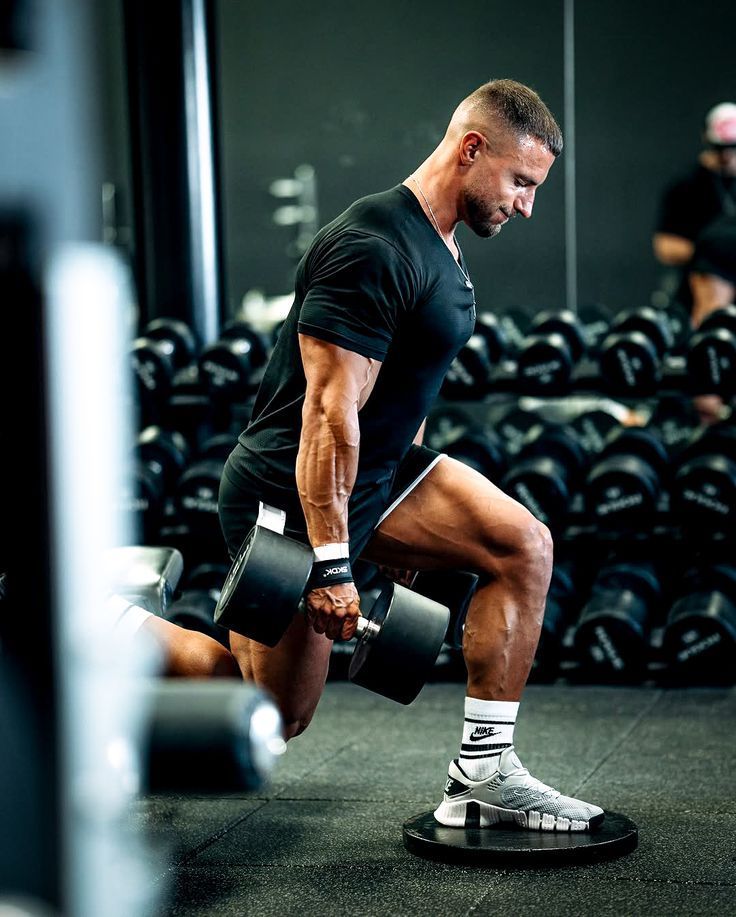
How to Log Sets and Reps for Real Progress

Quick Answer / TL;DR
Logging sets and reps means recording your exercises, sets, reps, and load so you can repeat workouts and apply progressive overload.
- Best for: Lifters stuck using Notes, notebooks, or spreadsheets
- Not ideal for: People who never repeat exercises (no baseline to beat)
- Most important: Track the main lifts consistently and set a clear next-session target
Logging sets and reps is the practice of recording your exercises, sets, reps, and load so you can repeat workouts consistently and progress on purpose. It is for lifters who want a clean system instead of guessing what they did last time, especially if they currently track in notebooks, Notes, or spreadsheets. When you log properly, consistency improves and progressive overload becomes straightforward because you can see performance over time.
If you have never logged a full week cleanly, try it once - it is the fastest way to see whether your training is actually progressing.
What it is and why it works
A good training log answers four questions for every working set:
- What did I do? (exercise and variation)
- How much did I do? (sets, reps, load)
- How hard was it? (effort note like RPE or reps in reserve)
- What should I do next time? (simple progression target)
It works because it turns training into a repeatable process:
- You stop relying on memory.
- You keep your plan stable long enough to improve.
- You can apply progressive overload with precision.
- You can spot stalls early and adjust without panic.
Best for / Not ideal for
Best for
- Late beginners and intermediate lifters who want predictable progression
- Anyone following a plan and trying to add reps or load over time
- Lifters tired of messy notes and “I think I did this last week”
- People training 3–6 days/week who repeat the same core lifts
Not ideal for
- People who change exercises every session and do not want repeatability
- Lifters who only track “best days” and skip the boring sessions
- Anyone who logs so much detail that it becomes friction and they quit
- People who ignore the log and train randomly anyway
How it works in practice
What to log for every exercise
At minimum, record:
- Exercise name and variation (example: Barbell Bench Press, pause bench, incline DB press)
- Sets x reps x load (example: 3 x 6 x 185 lb)
- Rest time only if it affects performance and you can keep it consistent
- Effort note for hard sets (example: RPE 8 or 2 RIR)
Optional but useful:
- Tempo or pause rules (only if you repeat them)
- Range of motion standard (example: squat to depth, touch chest on bench)
- Equipment notes that change the lift (straps, belt, sleeves)
The simplest logging format that works
Use one line per set:
- Bench Press: 185 x 6 (RPE 8)
- Bench Press: 185 x 6 (RPE 8)
- Bench Press: 185 x 6 (RPE 9)
Then add a “next time” target:
- Next time: try 185 x 7 on set 1, keep RPE 8-9
How to log warm-ups vs working sets
You do not need to log every warm-up set.
- Log warm-ups only if they are structured and repeatable.
- Always log working sets and any meaningful top set.
A practical rule:
- If it creates a progression decision later, log it.
- If it is just ramp-up, you can skip it.
Example logging breakdown
Here is what “clean logging” looks like for a common main lift plus accessories.
Exercise | Set 1 | Set 2 | Set 3 | Notes for next time |
|---|---|---|---|---|
Back Squat | 225 x 5 (RPE 7) | 225 x 5 (RPE 8) | 225 x 5 (RPE 8) | Add 5 lb if depth stays clean |
RDL | 185 x 8 (2 RIR) | 185 x 8 (2 RIR) | 185 x 8 (1-2 RIR) | Add 1 rep per set first |
Leg Press | 270 x 12 (2 RIR) | 270 x 12 (2 RIR) | 270 x 11 (1 RIR) | Hold load, aim 12,12,12 |
Calf Raise | 90 x 12 | 90 x 12 | 90 x 12 | Add reps to 15, then add load |
This is where tracking pays off. Log the exact sets and reps in Nudges Me, follow your plan next week, and beat one small number without guessing.
How to progress safely
- Choose a rep range for each lift.
Example: squat 3–6 reps, RDL 6–10 reps, leg press 10–15 reps. This makes progression measurable. - Pick one progression method and stick to it.
Two reliable options: - Add reps first: hit the top of the rep range across sets, then add load.
- Add load in small steps: add 2.5–5 lb when reps and form stay consistent.
- Use effort notes to keep progression honest.
If last week was 225 x 5 at RPE 7 and this week is RPE 9, you did not get stronger. Adjust load to hit the target effort. - Progress the main lift first, then accessories.
Your biggest return comes from repeating and improving the main patterns. - Review performance over time, not one session.
The log is a trend tool. Look at 3–6 weeks of data before you decide you are stalled.
Common mistakes
Mistake | Why it’s a problem | Better approach |
|---|---|---|
Logging only the heaviest set | You lose the context that drives progression | Log all working sets for the main lift |
Writing “felt good” without numbers | You cannot repeat or improve it | Record sets, reps, load, and an effort note |
Mixing exercise variations unknowingly | Progress becomes fake comparisons | Log the exact variation and keep it stable |
Changing the plan weekly | The log cannot show trends | Run the same plan 6–10 weeks |
Tracking too many details | Logging becomes friction and you quit | Keep it to what drives decisions |
No next-time target | Logs become history, not a plan | Add one simple goal for the next session |
How to track this with Nudges Me
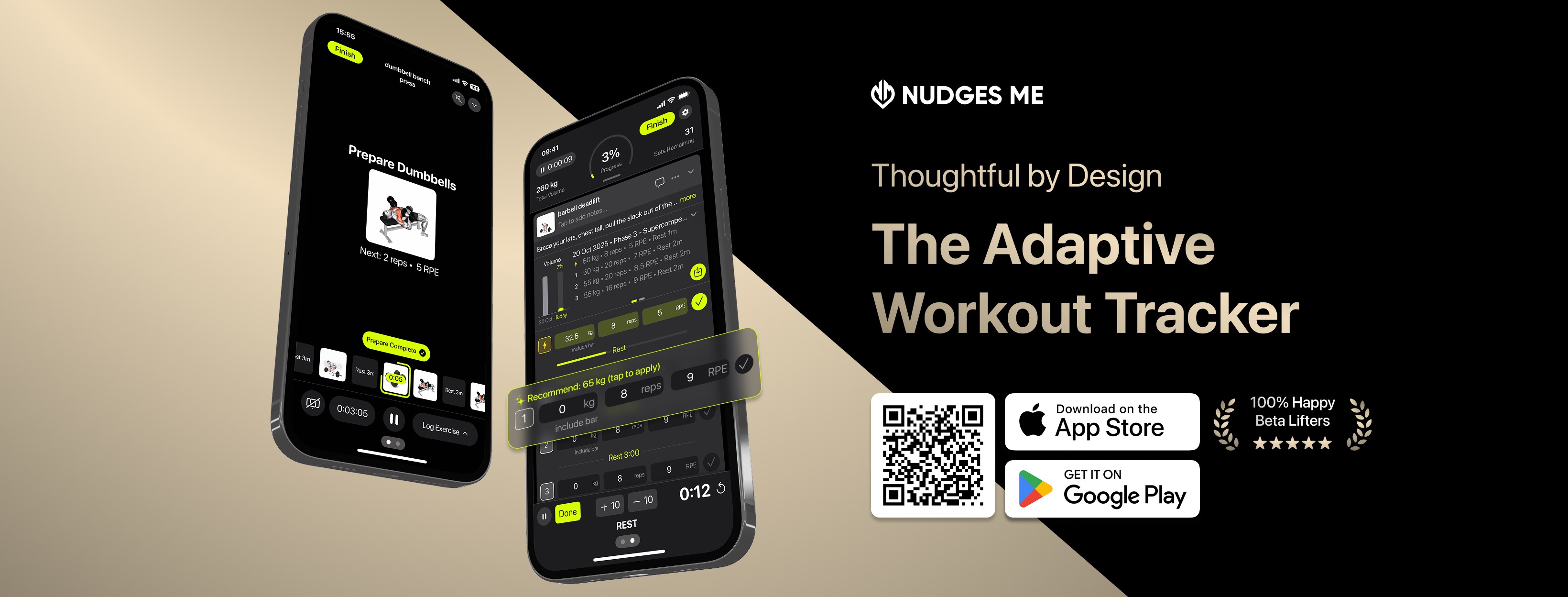
With Nudges Me, the goal is simple: make your training repeatable and progression visible.
You can:
- Log workouts with exercises, sets, reps, and load
- Follow workout plans so the structure stays consistent week to week
- See progression over time by comparing what you did last session and what you do next
This is what replaces messy notes and spreadsheet clutter - one clean log that drives your next workout.
FAQs
- Do I need to log every set?
Log all working sets for your main lifts. For smaller accessories, log enough to progress consistently. - Should I log warm-up sets?
Not required. Log them only if your warm-ups are structured and you want to repeat them. - What matters most when logging workouts?
Exercise variation, sets, reps, load, and a simple effort note for hard sets. - How do I log progressive overload?
Use rep ranges and record a next-time target, like adding 1 rep or 5 lb when form holds. - Is it better to log in a notebook or an app?
Either can work. An app makes it easier to keep plans organized and see progression over time without losing entries.
If your sets and reps are scattered across notebooks, Notes, or Excel, you will keep repeating workouts without clear progression. Stop guessing - log your workouts in Nudges Me, follow your plan, and see progression over time in one clean place.
About the author
Trung Do
Related Articles
Continue reading with these related posts

PR Meaning in Gym: Personal Records Explained
What does PR mean in the gym? Learn personal records, types of PRs, how to set them safely, and how to track PR progress over time.

RPE/RIR for consistent training
Learn the RPE scale and RIR for lifting. Use RPE to stay consistent, manage effort, and progress week to week without guessing.